
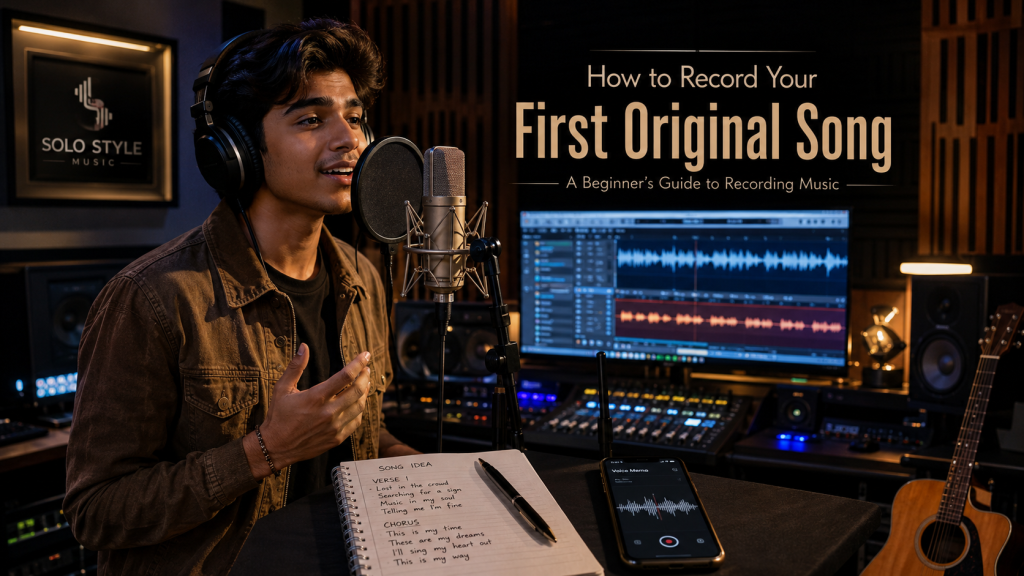
Recording your first original song is an exciting step for any aspiring artist. You may have written the lyrics, created a melody, or simply had an idea that you want to turn into a real song. But when you are a beginner, the recording process can feel confusing.
What equipment do you need? Should you record vocals first? Do you need a music producer? How does mixing and mastering work?
The good news is that you don’t need to know everything before entering a recording studio. With the right preparation and professional guidance, you can turn your idea into a complete song.
If you are wondering how to record your first original song as a beginner, this step-by-step guide will help you understand the process.
1. Start With a Clear Song Idea
Before you book a studio session, make sure you have a basic idea of your song.
You don’t necessarily need a completely finished track. However, you should have some important elements ready, such as:
- Lyrics
- Melody
- Song concept
- Basic song structure
- Reference songs
- Vocal style
Think about what you want your song to communicate. Is it romantic, emotional, energetic, motivational, or experimental?
Having a clear direction makes it easier for a producer and recording engineer to understand your vision.
2. Finish and Practice Your Lyrics
If you are writing an original song, spend enough time refining your lyrics.
Read them aloud and sing them several times. This helps you identify lines that feel difficult to sing or don’t fit naturally with the melody.
You should also practice your pronunciation, timing, and delivery.
For beginners, practice is extremely important because recording multiple takes of the same section can consume studio time.
The more familiar you are with your lyrics, the more confidently you can perform in front of the microphone.
3. Decide What Kind of Music You Want
The next step is deciding what kind of sound you want for your song.
For example, your song could have:
- Pop production
- Hip-hop or rap
- Acoustic music
- Romantic Bollywood-style sound
- Indie music
- Electronic production
- Lo-fi elements
You can share reference songs with your music producer to explain your expectations.
You don’t need to copy another artist’s song. Reference tracks simply help communicate the type of sound, energy, instrumentation, and production style you prefer.
4. Work With a Music Producer
If you have lyrics and a melody but don’t know how to create the instrumental, working with a music producer can make a huge difference.
A producer can help develop your idea into a complete musical arrangement.
They may work on:
- Instrument selection
- Beats and rhythm
- Chords
- Song arrangement
- Sound selection
- Intro and outro
- Overall musical direction
For a beginner, professional production support can help turn a simple idea into a more polished and complete song.
5. Choose the Right Recording Studio
Once your song concept and music are ready, you need a suitable recording studio.
Look for a studio with good acoustic treatment, quality microphones, professional recording equipment, and an experienced engineer.
But equipment isn’t everything.
The studio team should also understand your music and make you feel comfortable while recording.
For your first song, a supportive environment is particularly important because you may feel nervous or inexperienced.
6. Understand the Vocal Recording Process
When you enter the studio, the engineer will set up the microphone and recording system according to your voice.
You will normally record the song section by section rather than trying to complete the entire song perfectly in one take.
Don’t worry if you make mistakes.
Professional recording sessions often involve multiple takes. The engineer can later select the strongest parts and use them during the editing and production process.
Focus on your performance instead of worrying about being perfect.
7. Don’t Be Afraid to Ask for Another Take
One of the biggest mistakes beginners make is being afraid to ask for another take.
If you know you can perform a particular line better, record it again.
You may also experiment with different emotions, vocal intensity, pronunciation, or delivery.
A good recording engineer can guide you through this process and help you get the best possible performance.
Your goal should be to capture a vocal performance that feels natural and matches the emotion of your song.
8. Editing Comes After Recording
Once your vocals are recorded, the next stage is editing.
The engineer may clean up unwanted noise, align certain parts, remove unnecessary sections, and select the strongest vocal takes.
This stage helps create a cleaner foundation for the final song.
However, editing should not remove the natural character of your voice. Your original performance and personality should still come through.
9. Mixing Makes Everything Work Together
After recording and editing, your song moves into the mixing stage.
Mixing involves balancing different elements of your song, including vocals, drums, instruments, bass, and effects.
The engineer adjusts levels, equalization, compression, reverb, delay, and other effects to create a balanced sound.
Good mixing ensures that your vocals remain clear while the instrumental supports rather than overwhelms your performance.
10. Mastering Gives the Song Its Final Finish
The final stage is mastering.
Mastering prepares your completed track for release and helps it sound consistent across different speakers, headphones, and listening platforms.
It is important not to treat mastering as an afterthought. A properly recorded and mixed song can still benefit significantly from professional mastering.
If your recording studio provides recording, mixing, and mastering together, the entire workflow can be easier to manage.
11. Solo Style Music Can Help You Bring Your Song to Life
For beginners, working with the right music team can make the recording process much easier.
Solo Style Music provides a professional environment for artists who want to turn their musical ideas into finished songs.
Whether you are starting with lyrics, a melody, or an original concept, the process can involve different stages such as song recording, music production, mixing, and mastering.
For a first-time artist, having professional support throughout these stages means you can concentrate more on your performance and creativity instead of worrying about the technical side of production.
Solo Style Music can be a place where beginners and independent artists can work on their original music and take their first step toward creating professionally produced tracks.
12. Listen to the Final Track and Request Revisions
Once the initial version of your song is ready, listen to it carefully.
Use good headphones or studio monitors if possible.
Pay attention to:
- Vocal clarity
- Instrument balance
- Volume
- Effects
- Overall emotion
- Any unwanted sounds
If something doesn’t feel right, communicate it to the producer or engineer.
Professional music production is often a collaborative process. Your feedback matters because you are the artist behind the song.
13. Prepare Your Song for Release
Once your song is completely finished, you can start preparing it for release.
Depending on your goals, you may want to publish it on music streaming platforms, YouTube, Instagram, or other social media platforms.
You can also create promotional content such as short videos, behind-the-scenes clips, lyric videos, and reels around the release.
Your first song doesn’t have to make you famous immediately. Focus on creating something that represents your style and gives you experience for your next project.
Common Mistakes Beginners Should Avoid
When recording your first original song, avoid these common mistakes:
Going to the studio without preparation:
Know your lyrics and practice your vocals before the session.
Choosing a studio only because it is cheap:
Consider sound quality, experience, services, and overall value.
Trying to sound exactly like another artist:
Use reference songs for inspiration, but develop your own identity.
Ignoring mixing and mastering:
A professional final sound requires more than just recording vocals.
Being afraid to communicate:
Tell your producer or engineer what you like and what you want changed.
Final Thoughts
Recording your first original song as a beginner may seem complicated at first, but the process becomes much easier when you break it into simple steps.
Start with a clear idea, prepare your lyrics, develop the music, practice your vocals, choose the right recording studio, and work with experienced professionals. After recording, focus on editing, mixing, and mastering before releasing your final track.
Most importantly, don’t wait until you feel like a “professional artist” to record your first song. Every experienced musician started somewhere.
With the right preparation and support from a professional music team such as Solo Style Music, your first idea can become a complete song that you can proudly call your own.
Your first original song doesn’t have to be perfect. It just needs to be your song—and it needs to be recorded.