
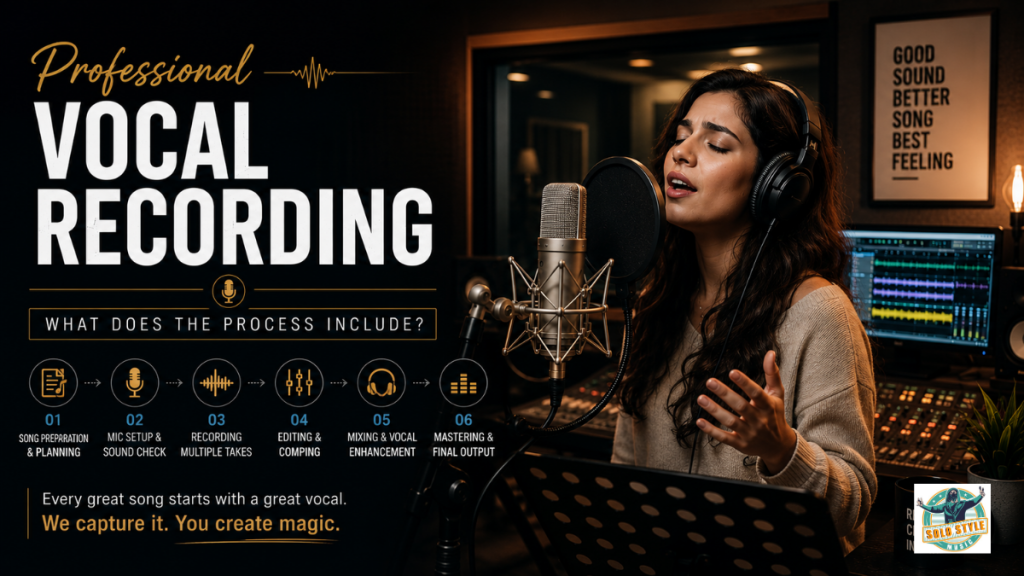
Have you ever wondered what actually happens when a singer enters a professional recording studio? Vocal recording is much more than simply standing in front of a microphone and singing a song. A professional recording session involves preparation, microphone selection, vocal performance, multiple takes, editing, mixing, and mastering to create a polished final track.
At Solo Style Music Studio, we work with singers at different levels, from beginners recording their first song to experienced artists looking to improve the quality of their releases. Our goal is to make the recording process comfortable, organised, and focused on getting the best possible performance from every vocalist.
Here is what you can expect from a professional vocal recording session.
1. Song and Vocal Preparation
Before recording begins, the first step is understanding the song.
The singer should ideally know the lyrics, melody, structure, and overall feel of the track. We discuss the song, identify difficult sections, and decide how the vocals should be performed.
Preparation may include:
- Checking the song’s key
- Reviewing lyrics and pronunciation
- Understanding the vocal range
- Marking difficult sections
- Discussing the desired vocal style
- Planning harmonies or backing vocals
If a particular key makes the song uncomfortable to sing, adjustments may be considered so the vocalist can perform naturally without unnecessary strain.
2. Setting Up the Recording Environment
The recording environment plays an important role in vocal quality.
A professional studio is designed to provide a controlled acoustic environment with appropriate sound treatment. This helps minimise unwanted reflections, external noise, and other distractions that can affect the recording.
At Solo Style Music Studio, we prepare the recording space according to the requirements of the vocalist and song. The aim is to give the singer a comfortable environment where they can concentrate on their performance.
3. Choosing the Right Microphone
Not every microphone sounds exactly the same.
Different microphones can emphasise different characteristics of a voice. A microphone that works beautifully for one vocalist may not necessarily produce the same result for another.
During a professional session, the microphone and its positioning can be selected according to the singer’s voice, performance style, and the requirements of the song.
The recording setup may also include a pop filter, microphone stand, headphones, audio interface, and other studio equipment.
4. Sound Check and Headphone Monitoring
Before the actual recording starts, the engineer checks the vocal level and makes sure the singer can hear the music comfortably through headphones.
The headphone mix is important because the vocalist needs to clearly hear the instrumental track and their own voice while singing.
The engineer checks for issues such as:
- Vocal level
- Background music level
- Microphone distance
- Unwanted noise
- Clipping or distortion
- Comfortable headphone volume
A proper sound check helps avoid technical problems later.
5. Vocal Warm-Up
Singing immediately at full intensity isn’t ideal for many vocalists.
A short warm-up can help the singer prepare for the session. Depending on the vocalist, this might include gentle humming, breathing exercises, lip trills, scales, or other comfortable vocal exercises.
The purpose isn’t to exhaust the voice. Instead, it is to help the vocalist feel comfortable and ready to perform.
6. Recording the First Takes
Once everything is ready, the actual recording begins.
The singer performs the song while the engineer records the vocal takes. It is completely normal for the first take not to be perfect.
During a professional session, we may record several takes of the same section. This gives the vocalist opportunities to improve timing, pitch, pronunciation, expression, and overall delivery.
The singer should not feel pressured to produce a perfect performance on the first attempt.
7. Recording Multiple Takes and Punch-Ins
Some parts of a song may require additional takes.
For example, a vocalist might perform the entire song once and then record a particular verse or chorus again. This is often called a punch-in.
Multiple takes allow the engineer and vocalist to select the strongest performances later.
The focus should remain on delivering a natural and expressive performance rather than simply recording as many takes as possible.
8. Recording Harmonies and Backing Vocals
Depending on the song, the main vocal may not be the only vocal track required.
Professional productions can include:
- Lead vocals
- Harmonies
- Backing vocals
- Doubled vocals
- Ad-libs
- Vocal effects
These additional layers can add depth and character to the final production.
At Solo Style Music Studio, we can help plan these vocal layers according to the style and arrangement of the song.
9. Vocal Editing
After recording, the raw vocal tracks need to be organised and edited.
Editing may involve removing unwanted noises, choosing the best sections from different takes, correcting timing issues, and arranging the vocal parts properly.
The goal of editing isn’t to remove the personality of the singer. Good editing should support the performance while keeping it natural.
10. Vocal Mixing
Once the vocal has been edited, mixing begins.
This is where the vocal is shaped so that it works properly with the instrumental track.
Depending on the song, mixing may involve:
- Volume balancing
- Equalisation
- Compression
- Reverb
- Delay
- De-essing
- Automation
- Creative vocal effects
The exact processing depends on the vocalist, genre, recording, and desired sound.
A well-mixed vocal should remain clear and expressive while fitting naturally into the overall production.
11. Mastering the Final Track
After mixing is complete, the final song can be prepared for mastering.
Mastering is the final stage of audio production. It helps prepare the finished track for distribution and ensures that the overall sound is balanced and suitable for different listening environments and platforms.
It is important to remember that mastering cannot completely fix a poorly recorded or poorly mixed vocal. This is why getting the recording and mixing stages right is so important.
How Can You Prepare for Your Vocal Recording Session?
A little preparation can make your studio session much smoother.
Before coming to the studio:
- Learn your lyrics properly
- Practise the melody
- Get adequate rest
- Stay hydrated
- Avoid excessive shouting
- Bring your reference track if needed
- Know the song’s structure
- Communicate any concerns with the engineer
Most importantly, don’t worry about being perfect.
Your Voice Is the Most Important Part
Professional equipment can improve the recording, but the vocalist’s performance remains at the centre of the song.
A good recording session should give the singer the right environment, technical support, and direction to perform confidently.
At Solo Style Music Studio, we believe that professional vocal recording is not simply about pressing the record button. It is about understanding the singer, preparing the song, capturing the performance properly, and carefully developing that recording into a finished musical track.
Whether you’re recording your first original song, a cover, or a professional release, the process becomes much easier when you have the right studio and people supporting you.
Your voice is your instrument. A professional recording process helps you present it at its best.